About
Creative Technologist | Extended Reality | Audio Design
Maximiliano Santander is a Swiss-based creative technologist, sound designer, and XR developer working at the intersection of immersive technologies, sound design, and real-time interaction
XR in industrial applications: Medical Devices
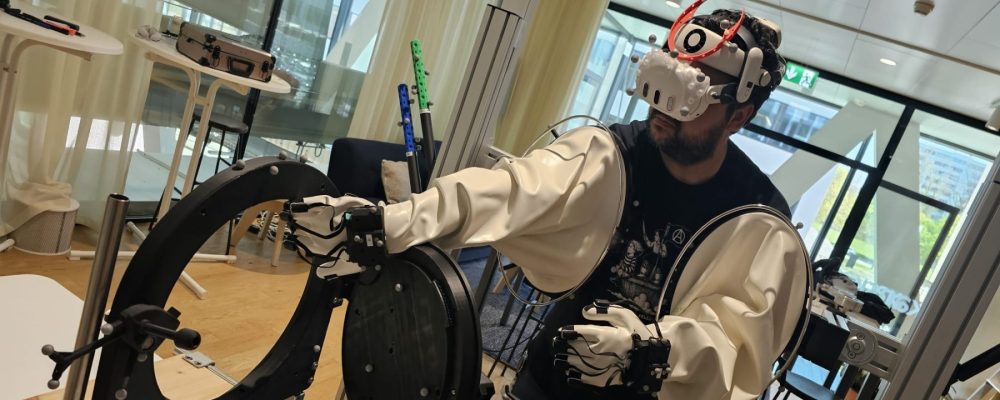
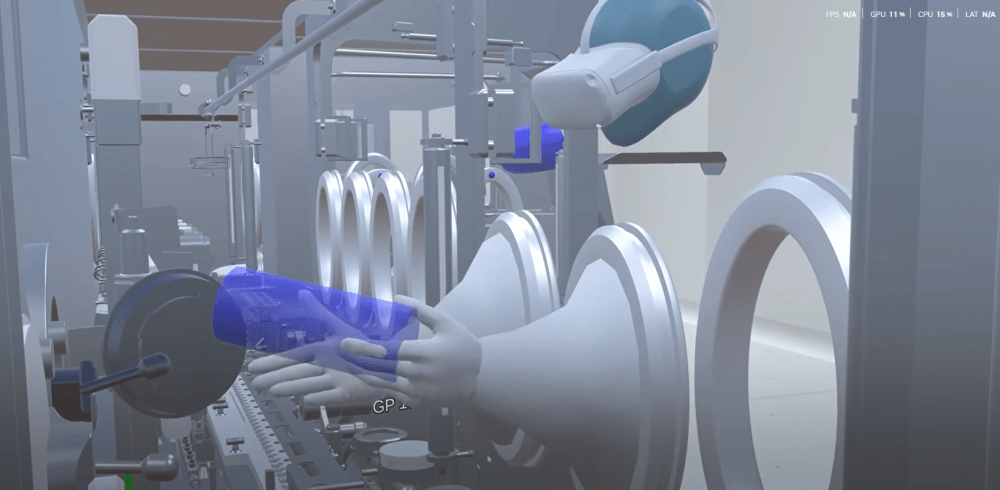
Currently professionally dedicated to Extended Reality, I focus on the research, development and application of new technologies within industrial and medical environments. Primarily on the integration of immersive systems into real-world workflows. My work includes supporting the development, testing, and deployment of XR solutions in highly regulated contexts, where reliability, clarity of interaction, and practical usability are critical. This also involves participation in client-facing processes, system validation, and the adaptation of XR technologies to operational needs. Additionally, I have contributed to internal innovation processes in the field of XR interaction design, supporting the development of company-level intellectual property.
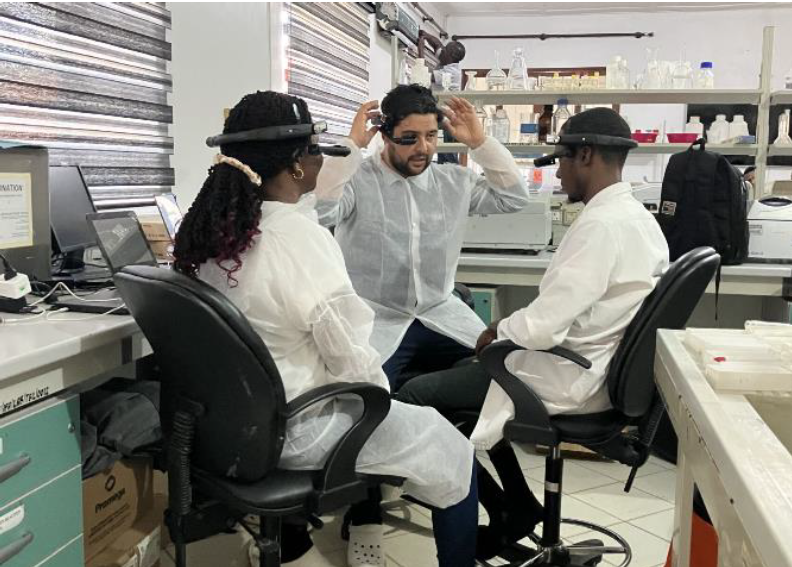
Earlier in my career, within an R&D context, I focused on immersive audiovisual systems, combining 360-degree video environments with spatial audio techniques such as ambisonics. This included the integration of interactive elements and the exploration of user interaction within controlled experimental setups, contributing to the broader field of XR-based perceptual and experiential research.
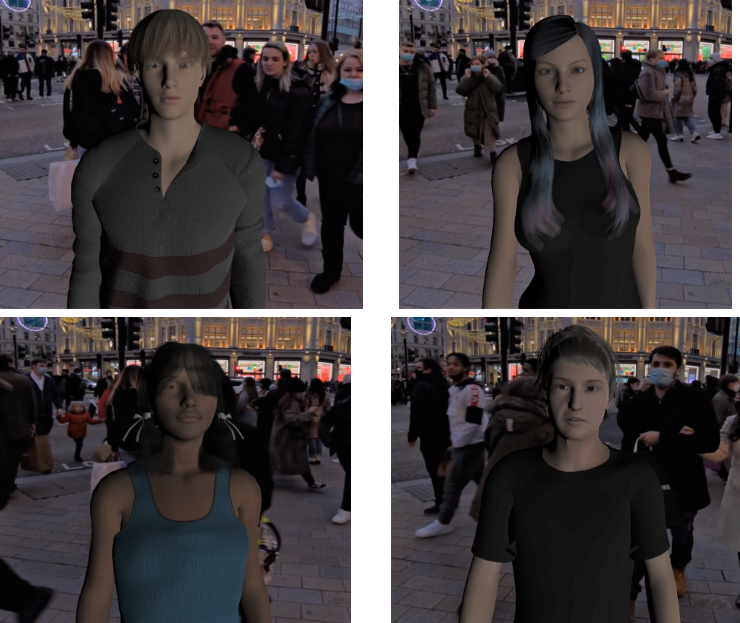
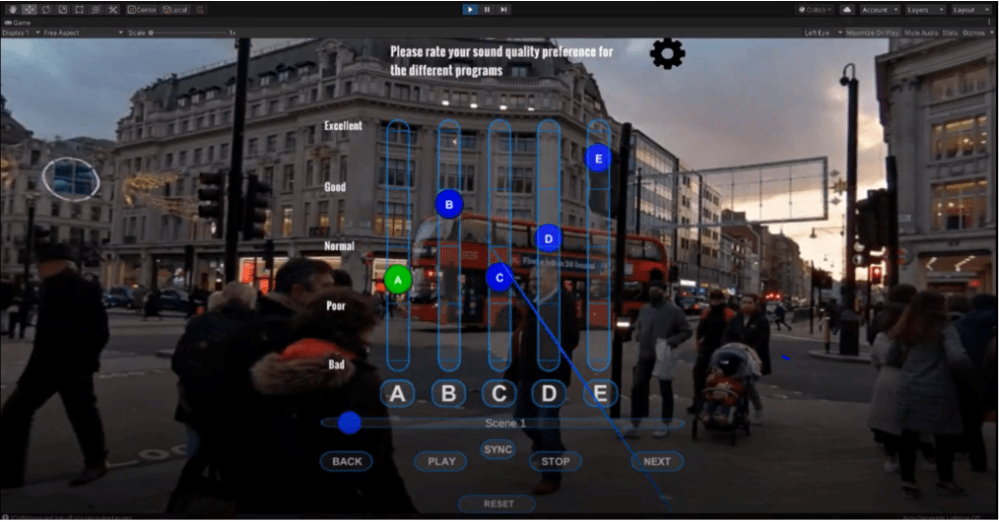
VR SO,UND? Virtual Reality Audio Game
VR So, und? A virtual reality experience designed as a «Gastdozent» in collaboration with students from the Sound Arts program at the Bern University of the Arts. The main idea is to capture sounds within the space and practice active listening and analysis in a playful and personalized way.
Presentation in Play Bern 2025
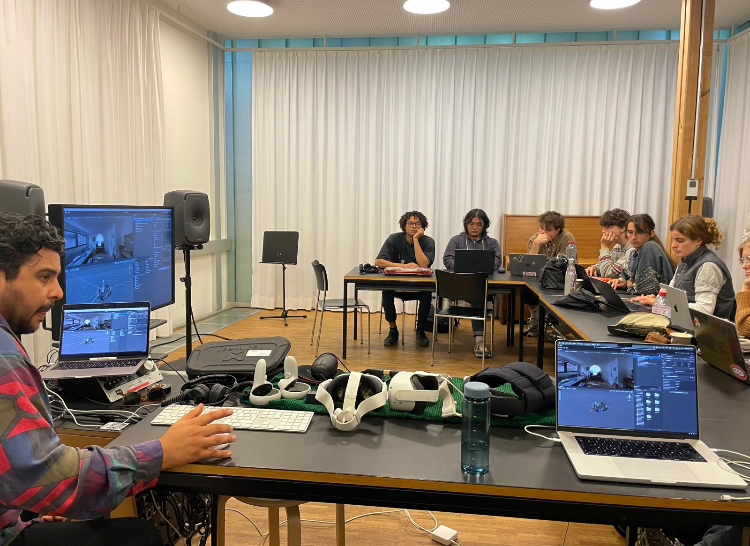
Chamber of Senses
Interactive project focused on using space as an instrument and on developing sonic and spatial awareness. Through extended reality and audio tools, it enables users —via play and movement— to “paint” sounds and timbres within a chamber of sensations.
Gabriella Gardosi , Maximiliano Quinones Santander, Oliver Lawrence.
Beneficiaries: Free@last, a non-profit community charity based in Birmingham, United Kingdom.
2024
EMU Transmedial Collective
Part of a multidisciplinary practice within EMU Collective, a platform dedicated to the development of experimental works at the intersection of technology, sound, and interactive media. The contribution focuses on the design and implementation of real-time systems, spatial audio environments, and XR-based experiences, integrating both technical development and artistic direction.
Within a collaborative framework, the role bridges software engineering, sound design, and interaction design, contributing to projects that explore perception, immersion, and embodied interaction. The approach emphasizes the construction of custom tools, prototyping workflows, and the translation of conceptual ideas into functional, deployable systems.
Through Emu Collective, this work operates in a context where artistic experimentation and technological innovation are inseparable, contributing to the development of new formats for audiovisual expression and interactive performance.
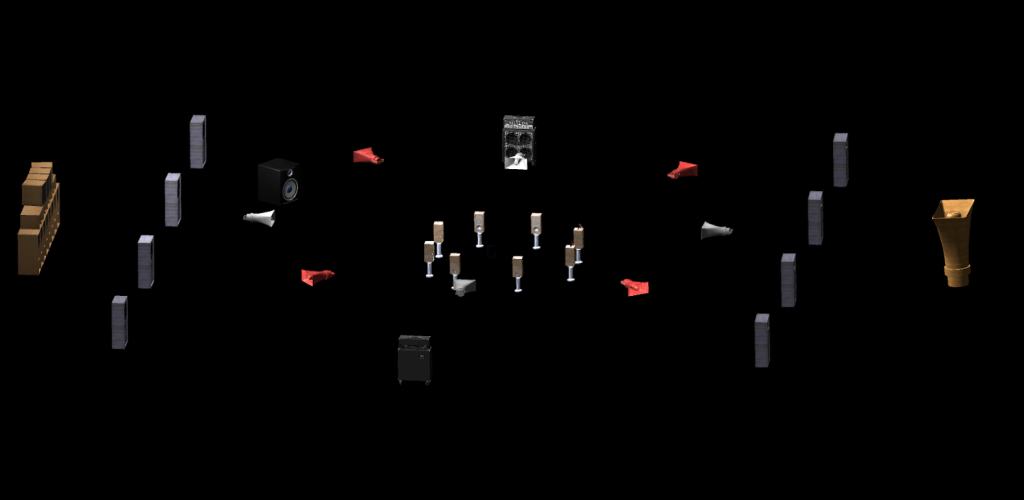
Virtual Reality Acousmonium
The VR Acousmonium is an interactive musical instrument in virtual reality for listening and sound exploration. My questions about the interactions between sound and virtual space have led me to the development of an interactive software that allows to listen to acousmatic and concrete music pieces exclusively mixed for this format; to explore the sound space, to make a new mix of the piece, to propose a new order of the virtual speakers located in the space, or even to change the room where this system is perceived.
Independent research in XR interaction
Performer Tracker
Performer Tracker is a real-time tracking system designed to capture a performer’s movement and translate it into usable data for audiovisual control. Using depth cameras and computational processing, the system converts position and gesture into signals (OSC/MIDI) that can be mapped to sound, visuals, or interactive systems.
The project enables the use of dynamic spatial zones and normalized coordinates, allowing integration with environments such as Ableton Live, Unity, or spatial audio systems. Its focus lies on precision, stability, and flexibility, providing a tool adaptable to both live performance and interactive installations.
Juggling Tracker Pro
Juggling Tracker Pro is an interactive learning system based on real-time absolute position tracking, designed to develop fine motor skills through juggling. Using high-precision tracking technologies , the project captures the trajectory of juggling balls in space and translates it into data that enables analysis, feedback, and skill improvement.
The concept builds a gameplay-oriented experience —inspired by systems such as Guitar Hero— where users interact with juggling balls equipped with embedded trackers, creating a direct link between physical movement and digital response. Visualization is delivered through augmented reality devices such as Xreal Air AR Glasses, overlaying real-time information without relying on computer vision approaches.
The project investigates how the digitization of movement can enhance human skills, opening applications in motor learning, rehabilitation, training, and the development of perceptual-motor abilities.
Sound Puzzle
Sound Puzzle is a game of curiosity and concentration. Step into a richly detailed world of art and sound, where each discovery reveals part of a larger story. No instructions, no guidance—just you, your senses, and the challenge of putting everything together.
This is not about rushing to the end. It is about listening, exploring, and letting the details guide you. A reflective experience for those who appreciate the beauty of discovering the unknown.
Artwork: The Garden of Earthly Delights, Hieronymus Bosch (1500–1505)
Luciola VR, Relax and breathe
Luciola is an experience commissioned by Sebastian Ulbrich, aimed at supporting patients in the context of psychological therapy. The project is designed to facilitate a state of relaxation before the session begins, helping users disengage from everyday stress and reach a more suitable mental state for therapy.
The application consists of an immersive environment populated by virtual fireflies that flicker in synchronization with the user’s breathing, encouraging a more stable and conscious respiratory rhythm. Within the experience, users can freely navigate through space, exploring different “nests” of fireflies accompanied by soundscapes built from recordings of nocturnal insects in the city of Biel.
The project combines interaction design, guided breathing, and sound design to create a calming environment focused on well-being and mental preparation.
Early prototypes
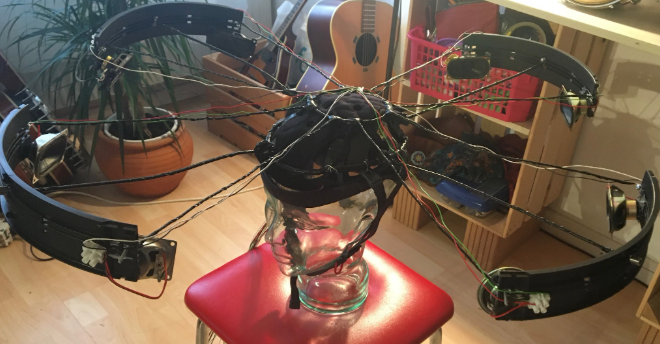
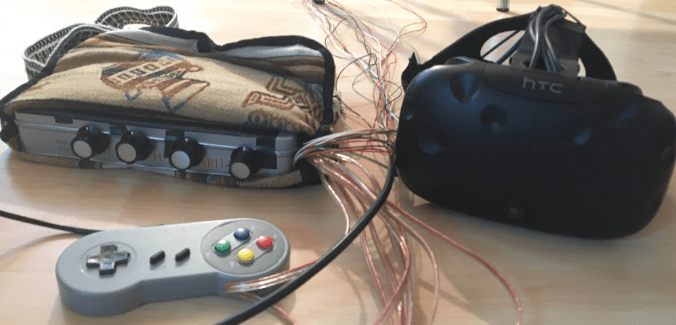
PMS (Personal Multichannel System) is a sound research project that explores new ways of listening through a wearable multichannel audio device.
The system was developed to rethink how sound is perceived and experienced, seeking a closer alignment with natural auditory perception. At its core, the project questions the limitations of traditional spatial audio setups—particularly the fixed “sweet spot”—by embedding the listening system directly on the user, allowing the auditory perspective to move seamlessly with the body.
This approach creates a stable and personal spatial listening field, independent of external speaker placement, enabling consistent immersion in motion.
From its early stages, the system was conceived for integration into virtual reality and interactive contexts. It has been explored within VR environments and a sound-based exploration game, where movement, perception, and spatial audio are tightly interconnected.
Contact : max.q.santander@gmail.com

